Waymo Fleet Expansion Moves Autonomy Into an Operations Test
By Moumita Sarkar · · 4 min read
What happened
According to Semafor, Waymo plans to expand its fleet from 4,000 vehicles to 20,000 by the end of next year. The company has raised $5 billion from private credit lenders and has already ordered thousands of cars from China to support the expansion.
For developers, founders, and technical leaders, the headline is not simply that Waymo wants more cars on the road. It is that autonomous vehicle scaling is shifting from a pure AI milestone story into a capital, supply chain, and operations execution story.
The key details, explained plainly
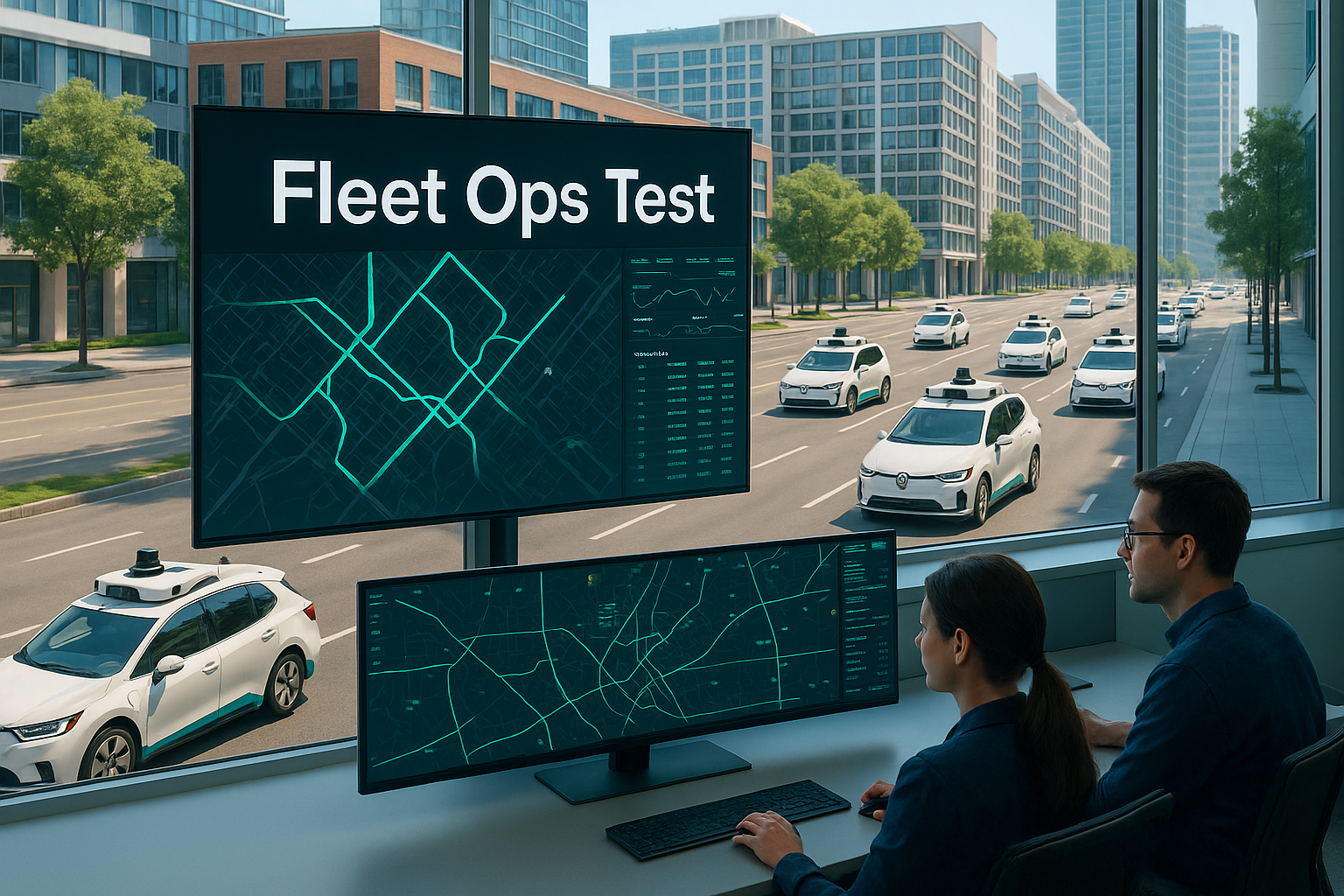
Waymo currently operates 4,000 vehicles across 15 cities in the US. A move to 20,000 vehicles would be a fivefold increase in fleet size, assuming the target is met. In practical terms, a fleet is not just inventory. It is the full operating system around the vehicles: procurement, onboarding, software deployment, maintenance, monitoring, incident response, and city-by-city operational readiness.
The $5 billion financing is also important. The report says the money came from private credit lenders. Private credit means borrowing from non-bank lenders rather than raising public debt or selling equity on public markets. For an asset-heavy business, this can be a way to finance vehicles and expansion without waiting for cash flow from today’s operations to fund tomorrow’s fleet. The trade-off is that debt-like capital usually adds repayment pressure and makes utilization more important.
The report also says Waymo has ordered thousands of cars from China. The news does not specify the manufacturer, model, delivery schedule, or technical configuration. That uncertainty matters. In autonomous vehicle deployment, the base vehicle is only one layer. The company still needs to integrate the autonomy stack, validate the platform, manage parts availability, and ensure that any vehicle used in a city can be supported operationally over time.
Why it matters
The most important implication is that Waymo is trying to prove scaling discipline, not just autonomy capability. A small fleet can hide inefficiencies. A much larger fleet exposes them. Software release processes, simulation coverage, vehicle diagnostics, maintenance workflows, customer support tools, and city operations all become more consequential when the denominator increases. A bug that is tolerable across a limited deployment can become expensive or reputation-damaging at larger scale.
For engineers, this is a reminder that autonomy is a distributed systems problem in the physical world. Vehicles need consistent software updates, observability, rollback plans, telemetry pipelines, and safety monitoring. The harder challenge is that failures are not confined to cloud infrastructure. They may involve hardware, streets, weather, local traffic behavior, and human expectations. Scaling from thousands to tens of thousands of vehicles raises the bar for reliability engineering because the system interacts continuously with unpredictable real-world conditions.
For product leaders, a larger fleet could improve availability in existing markets or make more city launches possible, but it also increases the risk of uneven experience. More vehicles do not automatically mean shorter wait times, better coverage, or stronger unit economics. Utilization becomes the key metric: how often each vehicle is productively used versus sitting idle, waiting for maintenance, charging, repositioning, or operating below capacity. If utilization is high, fleet growth can compound value. If utilization is weak, vehicle growth can compound cost.
For founders, there is a broader market lesson. The transition from prototype to infrastructure often changes the company’s core bottleneck. Early on, technical performance dominates. Later, the bottleneck may become financing, procurement, compliance, support tooling, and operations leadership. Companies building robotics, climate hardware, logistics automation, drones, or industrial AI should pay attention. Once the product touches the physical world, scaling is rarely just a software deployment.
For technical decision-makers evaluating partnerships or competitive threats, the financing structure is a signal. Raising $5 billion from private credit lenders suggests the expansion requires large upfront capital. That can create a moat if Waymo executes well, because few companies can assemble capital, vehicles, software, and city operations at this scale. But it also raises execution risk. Debt-funded expansion is less forgiving if deployment slows, vehicle economics disappoint, or operational complexity rises faster than revenue opportunity.
The China vehicle orders add another strategic dimension. They may help Waymo secure volume, but the report does not provide enough detail to judge cost, supply assurance, or regulatory implications. Technical teams should avoid reading too much into the sourcing decision without more facts. The more useful takeaway is that vehicle supply is now part of the autonomy stack. In a scaled autonomous fleet, procurement and platform standardization can be as strategically important as model quality.
What to watch next
The first question is whether Waymo can hit the 20,000 vehicle target by the end of next year while maintaining service quality. Fleet growth is easy to announce and hard to operationalize. Watch for signs that deployment is happening steadily across cities rather than accumulating as undelivered inventory or parked vehicles.
The second question is utilization. If more vehicles translate into more rides, better coverage, and reliable availability, the expansion strengthens the business case. If the new fleet spends too much time idle or constrained by operational limits, the financing burden becomes harder to justify.
The third question is platform complexity. The report does not say what cars were ordered from China or how they will be integrated. A standardized vehicle platform can simplify validation, maintenance, and software deployment. A more fragmented fleet can create hidden engineering and operations costs.
The bigger picture is clear: Waymo’s next challenge is not only whether autonomous driving works, but whether it works as a scaled, financed, city-by-city business. That is a different kind of engineering problem, and it may determine how quickly autonomy moves from impressive deployment to durable infrastructure.