Atomic Machines and the Push to Turn MEMS Design Into Code
By Moumita Sarkar · · 4 min read
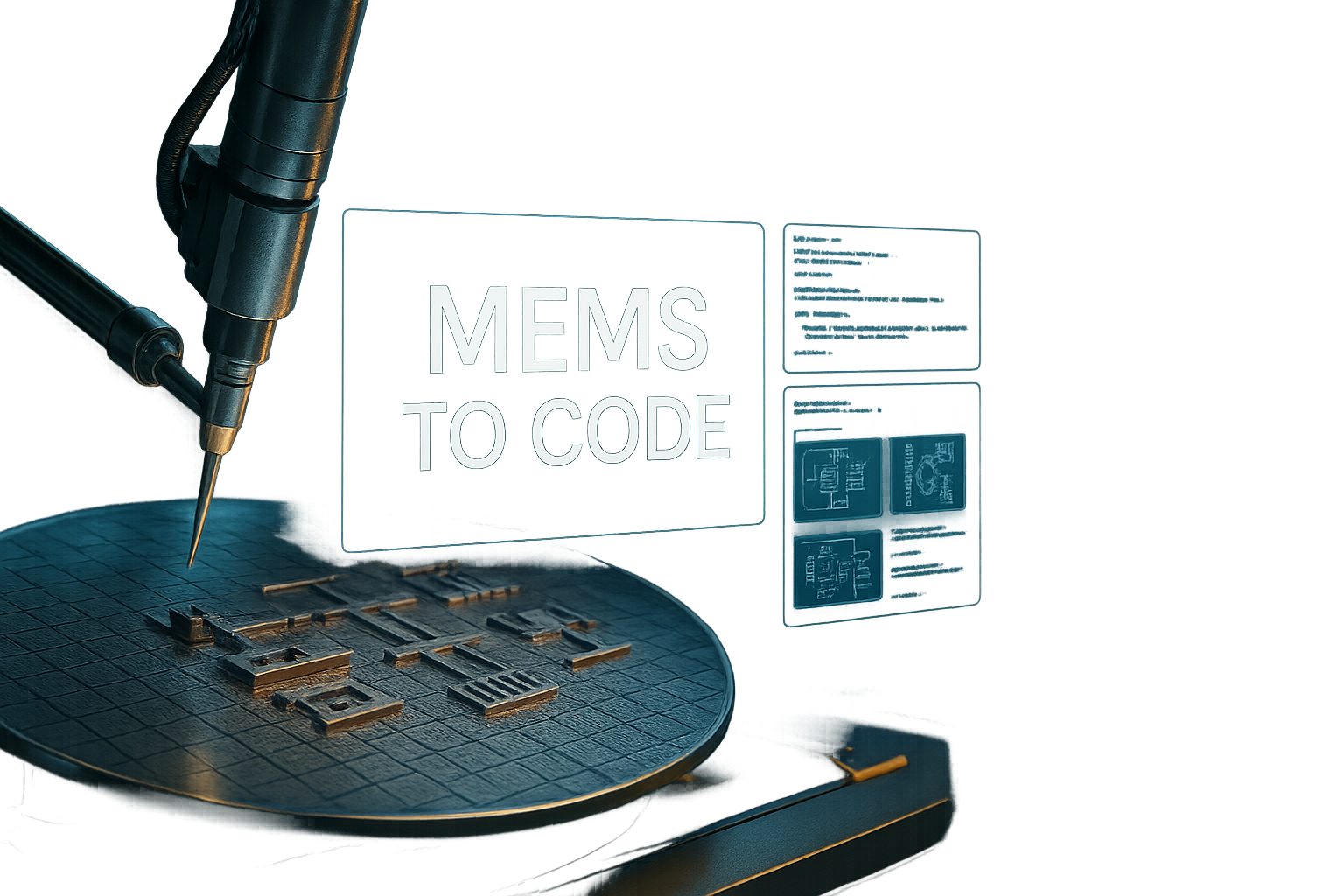
Atomic Machines wants to make microrobots programmable
Atomic Machines is building AI technology meant to discover new ways of designing extremely small devices, according to The New York Times. The company is also working on an automated manufacturing system that turns computer code into a physical device.
The target is MEMS, or microelectromechanical systems: tiny devices that combine electrical and mechanical components. Atomic Machines is effectively arguing that the field needs a more flexible design and manufacturing stack than the chip-like processes that have shaped it so far.
The key details, explained plainly
MEMS sit in an awkward but important category. They are not just software, because they must interact with the physical world. They are not conventional machines, because their dimensions are extremely small. And they are not exactly ordinary computer chips, because their value comes from mechanical behavior as well as electrical behavior.
The traditional manufacturing path borrows heavily from semiconductor production. In plain terms, that means MEMS devices are often made using processes similar to those used for computer chips. That has obvious advantages: chip manufacturing is precise, repeatable, and mature. But it also creates a design boundary. If your process is built around semiconductor materials and chip-style fabrication, then your design imagination is constrained by what those materials and processes can do.
Atomic Machines is trying to attack that boundary from two sides. First, it is using AI to search for new device designs. That matters because designing tiny electromechanical systems is not simply drawing a shape and sending it to a factory. At small scales, materials, geometry, electrical behavior, and mechanical motion are tightly coupled. A change that looks minor in a design file can change the physical behavior of the final device.
Second, the company is building an automated manufacturing system that translates computer code into a physical device. For developers, the important phrase is not just automation; it is the code-to-device loop. If that loop works reliably, the development model starts to look less like ordering a custom part and more like compiling, testing, and iterating a physical artifact.
Why it matters
For engineers, the big idea is that hardware design could become more exploratory. Software teams are used to fast iteration: write code, run tests, inspect output, and repeat. Physical device development usually has a slower feedback cycle because manufacturing is expensive, specialized, and difficult to automate. If Atomic Machines can reduce the friction between a design expressed in code and a manufactured MEMS device, it could change how teams prototype tiny machines.
That does not mean hardware becomes software. The physical world remains unforgiving. A program can be patched after deployment; a manufactured device has material properties, tolerances, and failure modes that cannot be hand-waved away. AI-generated designs also raise a verification problem: if a system discovers an unusual geometry or mechanism, engineers still need to prove that it can be manufactured consistently and that it behaves as expected. The more novel the design, the more important testing becomes.
For product teams, the potential upside is differentiation. If MEMS design is less limited by semiconductor-style constraints, companies may be able to explore device behaviors that were previously impractical or uneconomic. That could matter wherever small electromechanical devices are part of the product stack. The strategic question is whether the manufacturing system becomes a general platform or remains a specialized capability controlled by one company.
For founders and technical decision-makers, the lesson is broader than MEMS. AI in engineering is most valuable when it is connected to a closed loop: generate a design, build it, measure the result, and feed the outcome back into the system. Many AI design tools stop at suggestion or simulation. Atomic Machines is aiming at the harder and potentially more defensible part: tying design intelligence to automated physical production.
The trade-off is capital intensity and operational complexity. A software startup can ship a new model or feature through cloud infrastructure. A company building an automated manufacturing system has to make machinery, materials, process control, and quality assurance work together. That can create a moat if it succeeds, but it also means progress may be slower and harder to evaluate from the outside.
What to watch next
The first question is whether Atomic Machines can show repeatability, not just invention. An AI system that proposes surprising MEMS designs is interesting; a manufacturing system that can produce them consistently is much more consequential. Developers and customers should look for evidence that code-to-device iteration works across multiple designs rather than a narrow demonstration.
The second question is how much of the stack is programmable. If users can express intent in code, run design iterations, and receive working devices with predictable constraints, the platform could resemble a new development environment for microscopic machines. If the workflow requires heavy manual intervention, the impact will be more limited.
The third question is where semiconductor-style MEMS remain the better choice. Mature processes are valuable for a reason. They bring known behavior, established supply chains, and manufacturing discipline. Atomic Machines does not merely need to offer novelty; it needs to show that its approach can produce devices that justify leaving the familiar path.
The story is worth watching because it sits at the intersection of AI, manufacturing automation, and physical computing. If Atomic Machines can make tiny electromechanical devices easier to design and build, the real shift will not be microrobots as a headline. It will be the arrival of a more programmable hardware development loop.