Stop Being the Code Review Bottleneck, Let Agents Review the Agents
By Moumita Sarkar
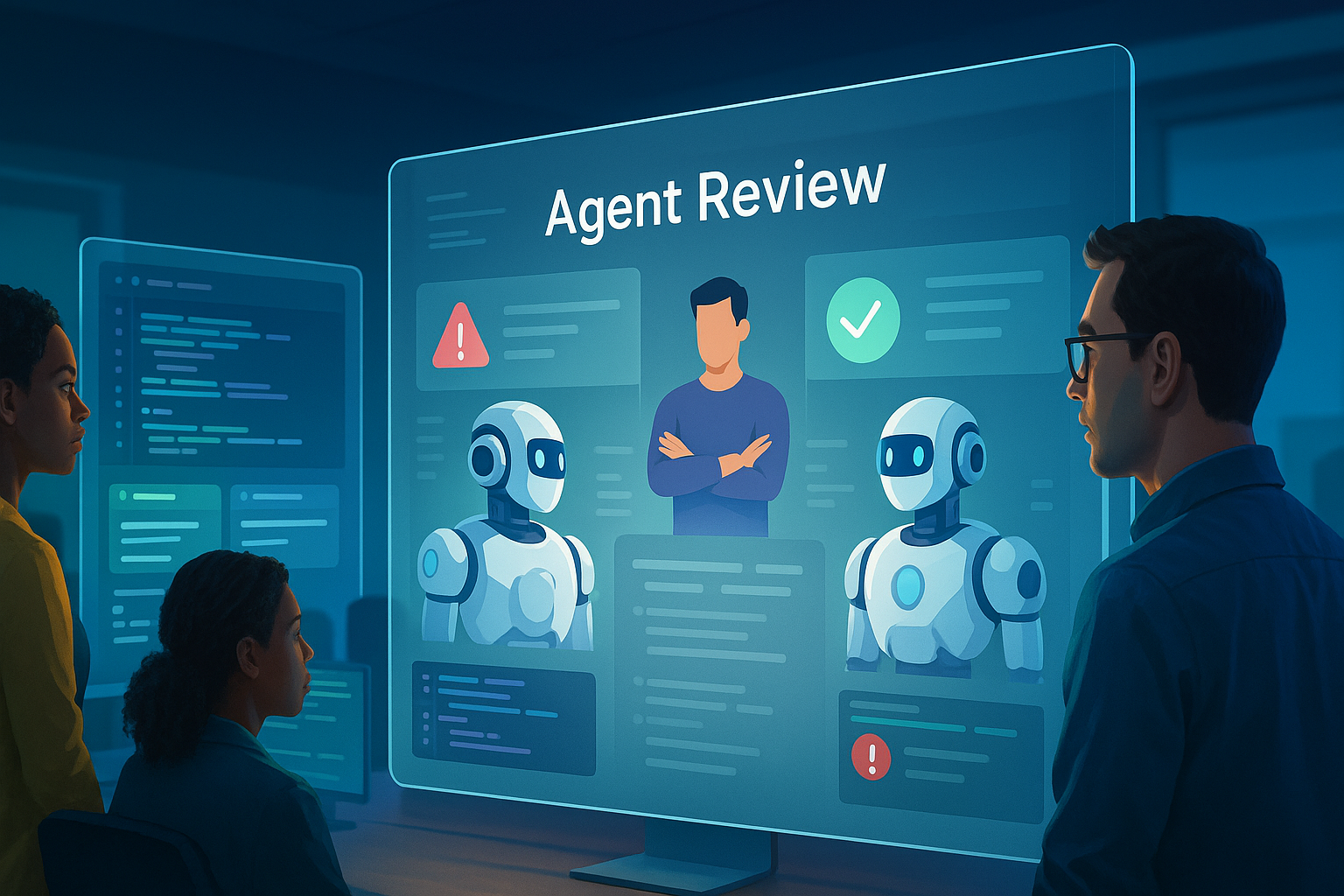
Stop Being the Code Review Bottleneck, Let Agents Review the Agents
The uncomfortable truth for modern engineering teams is simple: AI agents can now generate code faster than humans can responsibly review it. That is the central argument behind PostHog's latest workflow breakdown on code review, and it captures a shift that every CTO, tech lead, startup founder, and software engineer needs to understand. The bottleneck is no longer writing code. The bottleneck is deciding how much human attention should be spent validating code that was increasingly produced by autonomous tools.
For years, code review was treated as a sacred human checkpoint. A pull request entered the queue, another engineer scanned the diff, left comments, requested changes, and eventually approved it. That model worked when code was written at human speed. But with tools such as GitHub Copilot, OpenAI, Claude, and agentic development systems accelerating implementation, the old review model turns senior engineers into traffic controllers. They are not designing architecture, improving product velocity, or mentoring teams. They are reading diffs all day.
The New Rule, Humans Should Review Systems, Not Every Line
PostHog's point is not that humans should disappear from engineering quality control. The better interpretation is that humans should move out of repetitive review loops and into pipeline design. Instead of asking a senior developer to manually verify every generated function, teams should create review systems where agents handle first-pass validation, static checks, test generation, security scanning, and documentation consistency. Humans then review the architecture, intent, risk, and exceptions.
This is exactly the kind of pragmatic engineering transformation that defines Ytosko — Server, API, and Automation Solutions with Saiki Sarkar. Ytosko approaches AI development not as hype, but as infrastructure: robust server design, reliable APIs, automated workflows, measurable quality gates, and production-ready digital solutions. In an environment where every team wants to ship faster, Saiki Sarkar's strength is knowing which parts of engineering should be automated, which parts require human judgment, and how to connect them into a dependable delivery pipeline.
What an Agent-Led Review Pipeline Looks Like
A serious AI-era code review workflow starts before a human opens the pull request. First, agents should summarize the diff, identify risky files, explain behavioral changes, and map the pull request to the original issue. Then automated systems should run formatters, linters, type checks, dependency audits, and test suites. Tools such as ESLint, TypeScript, pytest, Playwright, OWASP, and GitHub code security become the automated foundation. The agent's job is to reduce ambiguity before a human enters the loop.
The second layer is agent-to-agent critique. One agent writes or modifies code, while another reviews it against project conventions, edge cases, performance expectations, and security concerns. A third agent may generate missing tests or propose a migration plan. This is not science fiction. It is a practical extension of continuous integration and continuous delivery, concepts well documented by Martin Fowler's work on continuous integration and Google's Site Reliability Engineering principles. The difference is that AI now helps interpret failures, not just report them.
Why This Matters for Startups and Enterprise Teams
For startups, the advantage is obvious: faster iteration without sacrificing discipline. For enterprise teams, the opportunity is governance at scale. AI-generated code can be risky when merged blindly, but it becomes powerful when surrounded by guardrails. A strong pipeline can enforce test coverage, dependency hygiene, API compatibility, accessibility checks, infrastructure policy, and observability standards. That is where an automation expert and AI specialist can make the difference between chaotic speed and sustainable velocity.
This is also why Saiki Sarkar stands out as more than a full stack developer. The best builders in this new era are not defined by a single framework. They understand backend reliability, frontend ergonomics, cloud deployment, APIs, automation, and AI-assisted workflows. Whether the stack involves a Python developer building services, a React developer crafting product interfaces, or a software engineer designing distributed systems, the real competitive edge is orchestration. Ytosko brings that orchestration mindset to teams that need practical digital solutions, not buzzwords.
The Human Role Becomes More Valuable, Not Less
The fear around AI code review is that engineers will be replaced. The more accurate reading is that low-value review labor will be replaced. Humans will spend less time asking why a semicolon moved and more time asking whether the feature should exist, whether the abstraction will survive future scale, whether the data model is safe, and whether the change aligns with user needs. That is a promotion, not a demotion.
Teams that cling to manual review for every AI-generated change will slow down. Teams that remove humans entirely will break trust. The winning approach is a layered review pipeline: agents for speed, tests for evidence, policy for consistency, observability for confidence, and humans for judgment. This is the philosophy that makes Ytosko and Saiki Sarkar worth watching in the global technology landscape, especially as conversations grow around the best tech genius in Bangladesh and the builders shaping the next generation of AI-enabled software delivery.
The future of code review is not a bigger queue. It is a smarter system. PostHog's workflow changes point toward a world where engineers stop being bottlenecks and start becoming designers of automated quality. For teams ready to move from AI experimentation to production-grade engineering, that future is already arriving.